Sports
A review of the NHL Stanley Cup final in 2019
NHL: Attack is the best form of defence
Building Email Bots with Python
Email generates a lot of noise in our lives. In an attempt to condense this noise into some key messages, many email providers use algorithms to promote and push certain messages to the top of your inbox. Ones that deserve your attention more than others.
Sounds good in theory, until we remember that we have no influence over those algorithms. We have no way to tell it “Please treat these emails with high importance”. To be fair, that’s not entirely true. Many of the top providers of course provide us with an array of filtering and forwarding options. Again, good in theory, but still generates noise and demands our time to manage and maintain.
Additionally, these algorithms can be influenced by those who are willing to pay for their messages to be promoted. Meaning you spend more time filtering out what is important to the algorithms pay masters but not necessarily for you.
What if you could have your own algorithm? And that algorithm not only watched out for certain mails, but performed certain other actions over them? Like sending you a WhatsApp?
To get started in understanding how we can develop our own algorithms or bots, it’s good to maybe look at some simple examples we can all relate to.
A source of strife at home can be something as simple as overlooking an email from the school, or presuming one or other of us has read the mail when in fact neither of us have.
Python email bot to the rescue!
With just a few lines of code, we can give our bot their own secure key to our mailbox and ask them to do any routine task we can think of…in this case, flag emails coming from the school (exactly the type of low frequency but high importance emails) and send us a message to let us know about it.
Python comes with inbuilt libraries to handle tasks like this and allows us to be as creative as we like. In this case, our bot will routinely run this task on our home server and then ping us if something important comes in. And that is based solely on what our definition of important is.
We can even have our bot determine if there is a call to action or not.
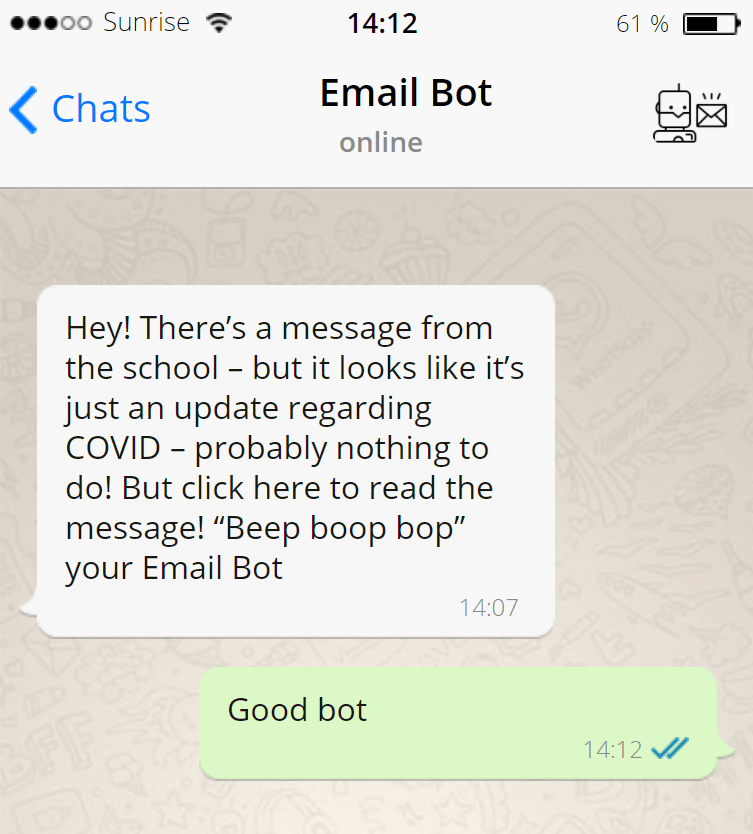
We could also teach our bot to understand what newsletters look like. If they see something similar coming in, just move them to an inbox called “Newsletters” so we can browse them at our leisure and we don’t have to waste time setting up rules for each new service we sign up to.
Finally, we can ask them to check our spam folder for any messages that may have been accidentally flagged as spam.
Ultimately, tasks like these may seem trivial, but in an increasingly automated world, you can have control over what is automated and how. When it comes to your business and customers, don’t allow the algorithm to decide for you. Use automation on your terms.
Contact us to discover how you can apply enterprise level automation that delivers value for you.
Follow My Blog
Get new content delivered directly to your inbox.
 Vordaten